
Trading 212 is a UK investment platform offering share dealing, tax-efficient accounts, a pension account, cash savings and contracts for difference through web and mobile services. This independent Trading 212 UK review examines the accounts, fees, funding rules, regulatory position and practical limits that matter to a British customer. It does not treat commission-free trading as cost-free investing: currency conversion, taxes, exchange charges and market risk still need attention.
Trading 212 UK at a glance
UK customers are served by Trading 212 UK Ltd, a company registered in England and Wales under company number 08590005. The firm is authorised and regulated by the Financial Conduct Authority under firm reference number 609146. Its product range covers long-term investing, tax-efficient saving and higher-risk leveraged trading, but those activities sit in separate accounts with different rules.
| Feature | Trading 212 UK information |
|---|---|
| Regulated entity | Trading 212 UK Ltd |
| FCA reference | 609146 |
| Main currency for UK customers | Pound sterling (GBP) |
| Core accounts | Invest, Stocks and Shares ISA, Cash ISA, SIPP and CFD |
| Platforms | Web service plus mobile applications |
| Investment warning | Capital is at risk and returns are not guaranteed |
The platform can suit customers who want to buy shares or exchange-traded funds in small amounts, use a UK ISA allowance or organise recurring investments. It is less appropriate for anyone expecting advice, guaranteed returns or protection from market losses. Trading 212 provides execution and account tools; investment selection remains the customer’s responsibility.
Trading 212 account types in the UK
The account menu is broader than a basic share-dealing service. A UK customer may see several products, subject to eligibility and onboarding checks. Choosing the correct account matters because tax treatment, access to funds and risk differ.
Invest Account
The Trading 212 Invest Account is the general share-dealing option. It supports eligible shares, ETFs and fractional holdings listed in the platform’s instrument catalogue. Customers can place orders, hold supported currencies and build portfolios without using leverage. Gains, dividends and interest may create UK tax obligations outside an ISA or pension, so records should be retained for tax reporting.
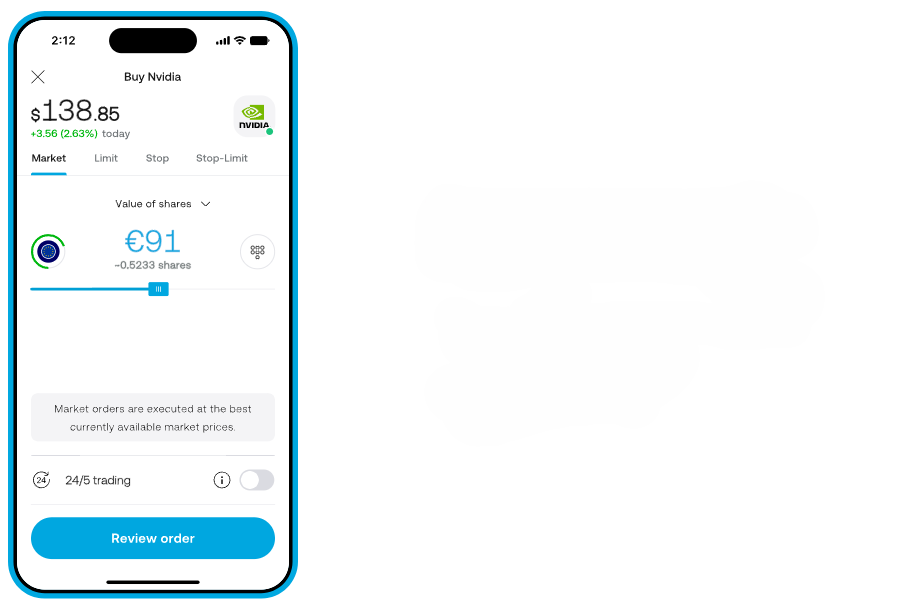
Fractional dealing lets a customer enter an amount in pounds instead of purchasing a whole share. This can help allocate a smaller portfolio across several holdings, although it does not reduce the underlying market risk. Instrument availability, trading hours, liquidity and order types depend on the security and market.
Stocks and Shares ISA
The Stocks and Shares ISA places eligible investments inside a UK tax wrapper. For the 2026/27 tax year, the overall ISA subscription allowance remains £20,000 across the customer’s ISAs. Tax treatment depends on personal circumstances, and ISA rules can change. A customer should therefore check current HMRC limits rather than treating an allowance quoted in an older article as permanent.
The account shares many functions with Invest, including eligible shares, ETFs, fractional dealing and portfolio tools. The ISA is designed for UK tax residents who want long-term investing without UK income tax or capital gains tax on qualifying returns inside the wrapper. It does not remove investment losses, dealing restrictions or foreign withholding tax that may apply at source.
Cash ISA
The Trading 212 Cash ISA is a flexible, instant-access account for eligible UK customers. It can be opened with £1. Its variable rate tracks the Bank of England base rate at a margin currently set 0.15 percentage points below that rate. Interest accrues daily and is paid monthly, while the actual rate is shown in the account. Quoting the live percentage in permanent page copy would quickly become inaccurate, so the relationship to the base rate is more useful.
Cash ISA deposits are accepted by bank transfer or instant bank transfer rather than by card. ISA subscriptions across providers count towards the same annual allowance. Transfers should follow the provider’s ISA transfer process; withdrawing money and paying it elsewhere can have different allowance consequences.
Trading 212 SIPP
The SIPP is a self-invested personal pension for eligible UK customers. An applicant normally needs to be a UK resident, at least 18 and under 75, with a verifiable National Insurance Number. Trading 212 supports personal contributions and claims basic-rate tax relief from HMRC. Employer contributions are not currently supported.
For most people, the pension annual allowance is up to £60,000 including tax relief, subject to earnings and pension rules. Lower limits can apply in some circumstances. Pension money is normally locked until the permitted access age, and tax rules at contribution and withdrawal stages are complex. A SIPP section should therefore explain the product without presenting it as suitable for every reader.
CFD Account
The CFD account is separate from ordinary ownership of shares. Contracts for difference are leveraged derivatives used to speculate on price movements without owning the underlying asset. Leverage can magnify losses as well as gains, while spreads, overnight interest and other product charges affect the result. Trading 212’s current warning states that 77% of retail investor accounts lose money when trading CFDs with this provider.
A CFD account should not be promoted as an easy extension of long-term investing. Customers must pass relevant assessments, understand margin requirements and be able to bear rapid losses. Anyone primarily seeking an ISA, pension or unleveraged portfolio can ignore the CFD product.
Shares, ETFs and portfolio tools
Trading 212 lists instruments from several exchanges, including the London Stock Exchange and major US and European markets. The exact catalogue changes, so customers should search the platform before assuming a particular share or ETF is supported. Some eligible US securities have extended 24/5 access, but normal market hours, wider spreads and lower liquidity remain relevant outside the main session.
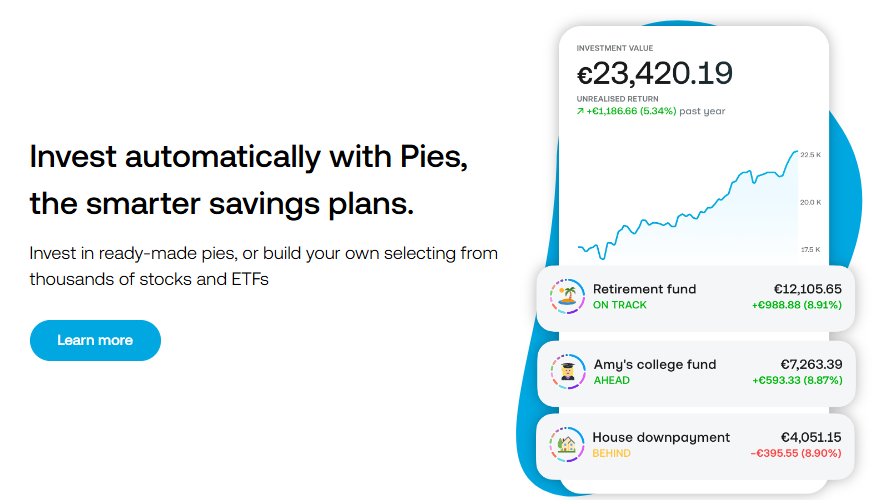
Pies allow holdings to be grouped into target percentages. AutoInvest can add scheduled contributions and allocate them according to those targets. Rebalancing instructions create trades, which may trigger FX conversion or tax consequences outside a wrapper. A ready-made Pie is not personal advice, and copying another portfolio does not make its risk suitable for the reader.
- Fractional shares permit amount-based orders on supported securities.
- Pies organise several holdings around selected target weights.
- AutoInvest supports scheduled contributions and allocation rules.
- Multi-currency balances can reduce unnecessary conversion when the required currency is already held.
- Portfolio transfers are available for supported assets and providers, subject to transfer eligibility.
Trading 212 fees for UK customers
Trading 212 does not charge a trading commission or custody fee on Invest, ISA and SIPP accounts. The platform can charge a 0.15% FX fee when a currency conversion is required. This distinction matters: buying a US share directly from a GBP balance may involve conversion, while using an available USD balance may avoid converting the same money for each trade.
| Cost | Typical treatment | What to check |
|---|---|---|
| Trading commission | £0 on Invest, ISA and SIPP | Other market costs can still apply |
| Custody fee | £0 on Invest, ISA and SIPP | Fund-level costs remain possible |
| FX conversion | 0.15% | Charged when conversion is needed |
| UK Stamp Duty Reserve Tax | Normally 0.5% on applicable LSE share purchases | Exemptions include eligible ETFs, bonds, gilts and AIM shares |
| PTM levy | £1.50 on applicable purchases and sales above £10,000 | Shown before confirmation where relevant |
Exchange, tax and regulatory charges are not the same as a broker commission. Funds and ETFs can also contain their own ongoing charges. The order review screen is the best place to inspect the amount that applies to a specific transaction. CFD pricing must be considered separately because spreads and overnight financing are central costs.
Deposits and accepted payment methods
Available funding methods depend on the account and customer profile. UK options can include bank transfer, instant bank transfer, debit card, Apple Pay and Google Pay. Credit-card deposits are not supported for customers onboarded by Trading 212 UK Ltd, American Express is unavailable and PayPal deposits are not offered. Money must come from the customer’s own personal account or payment method; third-party and business-account funding is not accepted.
Cash ISA funding is narrower, using bank transfer or instant bank transfer. Card and wallet funding rules, free allowances and possible deposit charges should be checked on the deposit screen before payment because account-specific limits can change. A bank transfer is commonly the clearest option for larger GBP deposits.
Withdrawals and processing times
A withdrawal can be requested from the Manage Funds area after cash is available. If investments were sold, settlement commonly takes one or two business days before the request can progress. Trading 212 provides a withdrawal tracker showing pending, review, processing and executed stages.
After a withdrawal is marked executed, arrival depends on the route and recipient provider. Faster Payments or instant routes may arrive quickly, standard GBP payments may arrive on the next business day, and some card or international routes can take two or three business days. Compliance checks, unsettled trades and payment-method verification can extend the total time. The same verified payment route may be prioritised to meet anti-money-laundering controls.
Registration and identity verification
Opening a Trading 212 UK account starts on the website or app, but identity and selfie checks must be completed on a mobile device. Applicants provide personal details, residential address, nationality, tax residence and the account type they want. Trading 212 then requests a motion selfie and an accepted identity document; proof of address or extra evidence may also be required.
- Create login credentials and confirm the requested contact details.
- Enter accurate personal, residential and tax information.
- Select an available account type and review its terms.
- Complete the mobile selfie and identity-document check.
- Provide a National Insurance Number or other applicable tax identifier.
- Complete any knowledge or appropriateness questions linked to the chosen product.
- Fund the approved account from a payment method held in the same name.
Accepted documents for Trading 212 UK Ltd can include a passport, identity card, driving licence or residence permit, subject to issuing-country rules. Details must match the application. Verification is a regulatory control, not an optional step, and further checks can occur later when account activity or withdrawals require them.
FCA regulation and client-asset protection
Trading 212 UK Ltd is supervised by the FCA under reference 609146. Client money and investments are held separately from the firm’s own assets under applicable FCA client-asset rules. Trading 212 states that client securities are kept in segregated custody arrangements involving established custodians.
Eligible claims may fall within Financial Services Compensation Scheme protection. If Trading 212 failed and eligible investments or money were missing, investment protection can apply up to £85,000 in total. If a partner bank failed, eligible cash may receive deposit protection up to £120,000 per person, per banking group, including other deposits the customer has with that banking group.
These limits do not insure portfolio performance. The FSCS does not repay losses caused by share prices falling, an ETF declining, adverse currency movements or an unsuccessful CFD trade. Regulation reduces certain operational and custody risks but does not turn investing into a guaranteed savings product.
Trading 212 mobile app and web platform
Trading 212 provides mobile applications alongside browser access. Core tasks include searching instruments, reviewing charts, placing orders, managing Pies, scheduling contributions, moving between eligible accounts, downloading statements and tracking withdrawals. Biometric access and device security options can help protect the account, but customers should still use a unique password and protect their email account.
The mobile-first verification process means a compatible phone is required during onboarding. The web platform is useful for account monitoring and order entry on a larger screen, while some identity, card and security tasks remain centred in the app. A Public API is available for supported Invest and Stocks and Shares ISA functions, although access and order capabilities can differ by account.
Customer support
Support is provided through the platform and Help Centre. The Help Centre covers account funding, withdrawals, ISA rules, SIPP administration, card functions, security and legal documents. Account-specific questions should be raised while signed in so the team can identify the relevant entity and account. Trading 212 advertises round-the-clock assistance, although resolution time depends on the issue and any documents required.
Benefits and limitations
The strongest parts of the UK service are its broad account selection, £0 commission structure for unleveraged accounts, low stated FX fee, fractional dealing and access to ISA and pension wrappers. Pies and recurring payments can reduce repetitive administration for customers following a defined allocation plan.
The limits are equally important. Trading 212 does not provide personal investment advice, and commission-free dealing does not remove tax, fund, market or currency costs. Fractional holdings and out-of-hours trading can involve execution restrictions. The product range may encourage frequent activity, while the CFD account introduces leverage and a high probability of retail losses. Customers who require advised portfolio management, in-person service or access to every market may need another provider.
Final assessment of Trading 212 UK
Trading 212 offers a capable UK platform for self-directed customers who understand what they are buying and want Invest, ISA, Cash ISA or SIPP access in one service. Its fee schedule is competitive, but the correct comparison includes FX, taxes, fund costs and the value of support rather than trading commission alone.
Before opening an account, a customer should select the correct tax wrapper, read the current terms, check instrument availability and decide how much market risk is acceptable. CFD trading deserves a separate decision and should never be treated as a routine feature of an investment account. Capital is at risk, tax treatment depends on personal circumstances, and past performance does not predict future returns.
Trading 212 UK FAQ
Is Trading 212 regulated in the United Kingdom?
Yes. Trading 212 UK Ltd is authorised and regulated by the Financial Conduct Authority under firm reference number 609146. FCA regulation does not protect customers from ordinary investment losses caused by market movements.
Does Trading 212 charge commission in the UK?
Trading commission and custody are free on Invest, ISA and SIPP accounts. A 0.15% FX fee applies when currency conversion is required. Taxes, exchange charges, fund costs and CFD-related fees may also apply.
Does Trading 212 offer a Stocks and Shares ISA?
Yes. Eligible UK customers can open a Stocks and Shares ISA. The overall ISA subscription allowance is £20,000 for the 2026/27 tax year. Tax treatment depends on personal circumstances, and ISA rules may change.
Which payment methods can UK customers use?
Options can include bank transfer, instant bank transfer, debit card, Apple Pay and Google Pay, depending on the account. UK credit-card deposits and PayPal are not supported. A Cash ISA accepts bank and instant bank transfers.
Is money held with Trading 212 guaranteed?
No. Eligible FSCS protection may apply if the firm or a partner bank fails, subject to scheme rules and limits. It does not cover losses from falling investments, currency movements or unsuccessful CFD trades.